Address
304 North Cardinal
St. Dorchester Center, MA 02124
Work Hours
Monday to Friday: 7AM - 7PM
Weekend: 10AM - 5PM
Address
304 North Cardinal
St. Dorchester Center, MA 02124
Work Hours
Monday to Friday: 7AM - 7PM
Weekend: 10AM - 5PM



$65
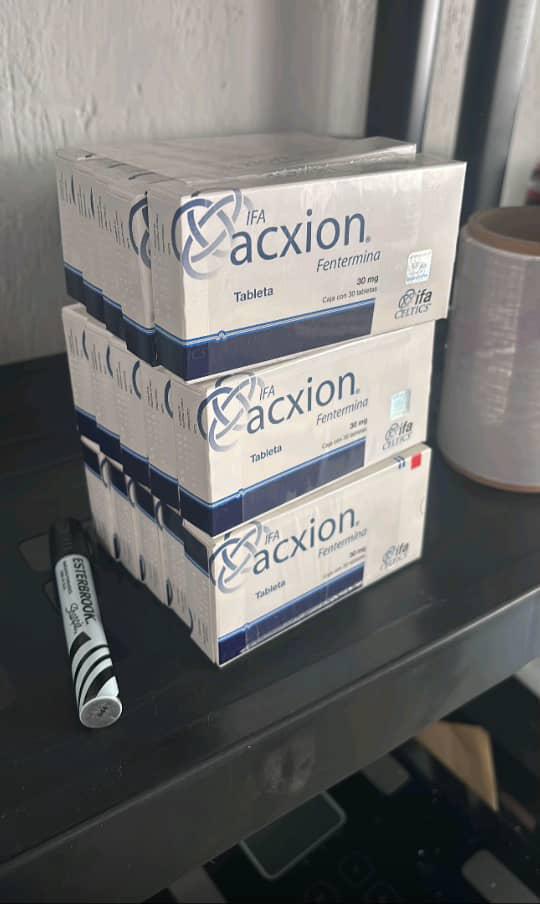
Acxion 30 mg is a prescription phentermine tablet used as an adjunct to diet and exercise in the medical management of obesity and certain cases of overweight with associated health risks. Learn about its formulation, uses, precautions, potential side effects and the importance of medical supervision.
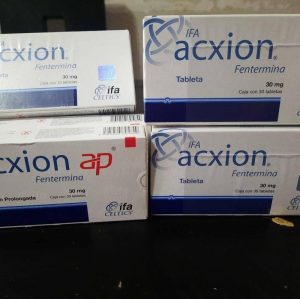
Acxion 30 mg is a phentermine medication manufactured by Investigación Farmacéutica, S.A. de C.V. (IFA) and available as a regular tablet formulation. The product information identifies phentermine hydrochloride as the active ingredient and lists a 30 mg phentermine presentation. Acxion is used as an anorectic medication as part of a medically supervised approach to managing exogenous obesity and certain cases of overweight associated with additional health risks.
Acxion 30 mg should be distinguished from Acxion AP 30 mg. Although both contain 30 mg of phentermine, Acxion AP is specifically identified as a prolonged-release formulation, while regular Acxion 30 mg is a conventional tablet formulation.
Because phentermine is a prescription medication with important precautions and potential interactions, Acxion 30 mg should be used only according to the instructions of an appropriately qualified healthcare professional.
Acxion 30 mg is a tablet containing phentermine, an anorectic medication with sympathomimetic activity in the central nervous system. The IFA product information lists regular Acxion in 15 mg and 30 mg tablet presentations.
The medication is intended to be used as an adjunct to a comprehensive weight-management program rather than as a replacement for healthy eating, physical activity, or professional medical care.
According to the available product information, Acxion is indicated as an aid in the treatment of exogenous obesity for patients with a BMI greater than 30 kg/m², or for certain patients with a BMI greater than 27 kg/m² when an associated condition such as hypertension, dyslipidemia, type 2 diabetes, sleep apnea, or osteoarthritis is present.
These criteria are product-specific and should not be interpreted as an automatic determination that any particular individual should receive Acxion.
The active ingredient in Acxion 30 mg is phentermine.
The product information describes phentermine hydrochloride as the source of the active phentermine and identifies regular Acxion tablets in 15 mg and 30 mg presentations.
Phentermine belongs to the sympathomimetic anorectic class of medications. Its central nervous system activity can reduce appetite, which may help reduce food intake when the medication is incorporated into an appropriate weight-management program.
Acxion 30 mg contains phentermine, which has sympathomimetic activity in the central nervous system.
The product information describes phentermine’s anorectic effect in connection with stimulation of norepinephrine release in the hypothalamus, contributing to reduced appetite.
In practical terms, appetite suppression may make it easier for some appropriately selected patients to follow a calorie-controlled eating plan.
Acxion 30 mg is not a guaranteed weight-loss treatment and should not be presented as a replacement for nutrition, exercise, behavioral changes, or medical monitoring.
Individual responses to phentermine vary.
Acxion 30 mg is intended to support a broader weight-management strategy.
A medically supervised program may include:
Calorie and nutrition management
Regular physical activity
Behavioral and lifestyle changes
Monitoring of weight and health indicators
Appropriate follow-up with a healthcare professional
The purpose of incorporating phentermine into treatment is to provide appetite-management support for appropriately selected patients.
Sustainable weight management generally involves more than medication alone.
The manufacturer information for regular IFA Acxion identifies 15 mg and 30 mg tablet presentations and lists a dosage range of 15 mg to 30 mg per day for the relevant product information. It describes administration before a meal and identifies morning administration considerations.
However, dosage must be individualized by the prescribing healthcare professional.
The 30 mg strength should not be interpreted as a recommendation for every patient. The appropriate dose can depend on the specific product, medical history, treatment response, concurrent medications, and other clinical considerations.
Do not increase, decrease, split, or otherwise modify your prescribed Acxion dose without professional medical guidance.
Acxion 30 mg should also not be confused with Acxion AP 30 mg, which is a prolonged-release formulation with different product characteristics.
For appropriately selected patients, phentermine may provide appetite-suppression support as part of a medically supervised weight-management program.
Potential treatment benefits can include:
Appetite management
Reduced food intake
Support for calorie restriction
Assistance with a structured weight-management program
Support for lifestyle changes
Acxion 30 mg does not guarantee a particular amount of weight loss.
Results can vary considerably between individuals, and treatment effectiveness should be evaluated by a healthcare professional.
Like other prescription medications, Acxion 30 mg may cause adverse effects.
Because phentermine has sympathomimetic activity, potential effects can include stimulant-related symptoms such as nervousness, restlessness, sleep difficulties, dry mouth, and changes in cardiovascular measurements.
The product information also identifies important precautions involving cardiovascular disease, severe hypertension, arrhythmias, seizure disorders, and other conditions.
Patients should contact their healthcare professional if they develop persistent, severe, or concerning symptoms.
Seek urgent medical attention for symptoms that could indicate a serious medical problem.
The complete list of potential adverse effects and warnings should be reviewed in the official product information supplied with the medication.
Acxion 30 mg is not appropriate for everyone.
The product information advises particular caution in patients with severe hypertension and cardiovascular disease, including arrhythmias. It also contains warnings concerning seizure disorders and prolonged use.
Important medical factors that should be discussed with a healthcare professional may include:
Cardiovascular disease
Severe or uncontrolled hypertension
Arrhythmias
Hyperthyroidism
Glaucoma
Pregnancy
Breastfeeding
History of substance misuse
Seizure disorders
Other prescription medications
Other weight-management medications
The product information also warns against use with monoamine oxidase inhibitors and contains specific pregnancy, breastfeeding, age, and dependency-related precautions.
A healthcare professional should determine whether Acxion 30 mg is appropriate after reviewing the patient’s individual circumstances.
Phentermine can interact with other medicines.
The IFA product information specifically warns against combining Acxion with monoamine oxidase inhibitors (MAOIs).
Patients should tell their healthcare professional about every prescription medication, over-the-counter medicine, vitamin, supplement, and other substance they use.
Potential interactions should be assessed before starting treatment.
Do not assume that a medication or supplement is safe to combine with Acxion simply because it is available without a prescription.
Acxion 30 mg and Acxion AP 30 mg both contain phentermine, but they are not the same formulation.
| Feature | Acxion 30 mg | Acxion AP 30 mg |
|---|---|---|
| Active ingredient | Phentermine | Phentermine |
| Strength | 30 mg | 30 mg |
| Formulation | Regular tablet | Prolonged-release tablet |
| Product type | IFA Acxion | IFA Acxion AP |
| Administration | Product-specific instructions | Product-specific instructions |
| Interchangeability | Do not assume | Do not assume |
The manufacturer identifies regular Acxion as a tablet product and Acxion AP as a 30 mg prolonged-release tablet.
Patients should use the exact formulation prescribed to them rather than substituting one product for another without professional guidance.
Medication is only one component of responsible weight management.
A comprehensive plan can include:
A balanced, calorie-appropriate eating pattern can support weight-management goals.
Regular physical activity can support cardiovascular health, fitness, and long-term weight management when appropriate for the individual.
Sustainable results often require changes in eating patterns, activity levels, sleep, stress management, and other daily habits.
Regular professional monitoring allows treatment response and potential adverse effects to be assessed.
Acxion 30 mg should be prescribed based on an individual medical assessment.
The product information identifies certain adults with obesity or overweight accompanied by relevant comorbidities as potential candidates for phentermine-assisted weight management.
However, BMI alone does not determine whether Acxion is appropriate.
A healthcare professional may consider:
BMI
Weight-related health risks
Cardiovascular health
Blood pressure
Medical history
Current medications
Pregnancy or breastfeeding
Previous weight-management treatments
Potential contraindications
Treatment response
Never use another person’s prescription or obtain prescription medication without appropriate medical evaluation.
The available IFA product information states that Acxion should be kept at a temperature not exceeding 30°C and stored in a properly closed package. It should also be kept out of the reach of children.
Patients should follow the storage and handling instructions supplied with their specific medication.
Because phentermine is a controlled prescription medicine in applicable jurisdictions, secure storage is especially important.
Acxion 30 mg is a regular tablet formulation containing 30 mg of phentermine and is used as an adjunct in the medical management of obesity for appropriately selected patients.
No. Both contain 30 mg of phentermine, but Acxion AP 30 mg is a prolonged-release formulation, while regular Acxion 30 mg is a conventional tablet.
The active ingredient is phentermine.
Yes. The product information identifies Acxion as a prescription medicine and states that it requires medical supervision.
Acxion is used as an adjunct to diet and exercise in the treatment of exogenous obesity and certain cases of overweight associated with additional health risks.
Yes. Phentermine can cause adverse effects, and the risks vary between individuals. Stimulant-related symptoms and cardiovascular effects are among the important safety considerations.
Some combinations may be unsafe. The product information specifically warns against concomitant use with MAO inhibitors. Patients should have their complete medication list reviewed by a healthcare professional before treatment.
The available product information states that Acxion should not be used during pregnancy or breastfeeding.
Do not switch formulations without medical guidance. Although both contain 30 mg of phentermine, Acxion AP is a prolonged-release formulation and therefore should not automatically be treated as interchangeable with regular Acxion.
Acxion 30 mg can be part of a medically supervised weight-management program for appropriately selected patients. Responsible use involves following the prescribed instructions, maintaining appropriate lifestyle measures, monitoring for adverse effects, and communicating with a healthcare professional throughout treatment.
Acxion 30 mg should not be promoted as a guaranteed weight-loss solution or used as a substitute for professional medical care.
Medical information disclaimer: This page is provided for general educational purposes and does not constitute individualized medical advice, diagnosis, or treatment. Acxion 30 mg is a prescription medication. Product indications, regulatory requirements, formulation details, and prescribing rules may vary by country. Always consult the official product information and an appropriately qualified healthcare professional before starting, changing, or stopping prescription medication.